"Where Creativity Meets Confidence – For Kids, Adults & Lifelong Learners!"
When God Heals You Slowly: What to Do While You Wait
Struggling with slow healing? Learn biblical truth and practical steps for what to do while waiting on God’s timing. This devotional guide helps women trust God through slow, quiet healing seasons.
Latasha Milton
11/30/202519 min read
Why God Heals Slowly (Biblical + Emotional Reasons)
Some seasons of healing feel unbearably slow. You pray, you cry, you surrender, and still the pain lingers longer than you expected. You start to wonder if God forgot you, if something is wrong with you, or if you’ll ever feel whole again. But here’s the truth most women don’t hear enough: slow healing is still healing, and it is often the way God does His deepest, most transformative work. When the breakthrough doesn’t come overnight, when the process feels silent, and when the progress is invisible, God is still moving—carefully, intentionally, layer by layer. Slow healing isn’t God’s delay. It’s His protection, His preparation, and His invitation to trust Him in ways you never have before.
Slow Healing Builds Trust, Not Control
One of the hardest lessons in healing is realizing that we cannot control the pace of our own restoration. We want quick answers, quick relief, quick closure — but God often uses slow healing to shift us from self-reliance to surrender. When healing happens gradually, it forces us to lean on God daily instead of leaning on our own strength or timelines. Slow healing becomes a faith exercise, teaching us to trust the God who sees the full picture, even when we can only see fragments.
Psalm 27:14 reminds us:
“Wait for the Lord; be strong and take heart and wait for the Lord.”
Waiting doesn’t weaken you. It strengthens you.
Isaiah 40:31 says:
“But those who wait on the Lord shall renew their strength…”
Waiting becomes the soil where new strength grows. Slow healing isn’t punishment.
It’s intimacy.
It’s dependence.
It’s the daily choosing of God over control.
When God heals you slowly, He is teaching you how to walk with Him, trust Him, and build spiritual resilience that a quick breakthrough could never produce.
Slow Healing Breaks Old Patterns
Quick fixes rarely create lasting change. God heals slowly because He isn’t just treating your symptoms — He’s uprooting patterns, beliefs, attachments, and emotional cycles that would keep you stuck if He healed you instantly.
Slow healing is the work of:
unlearning old coping mechanisms
breaking toxic emotional habits
resetting your nervous system
detoxing from old identities
re-learning what healthy feels like
This “emotional rewiring” takes time and it’s mercy that God does it gently, layer by layer. If God healed you instantly without removing the roots beneath the pain, you would end up repeating the same cycles, returning to the same relationships, chasing the same validation, or falling into the same emotional patterns.
Slow healing is God’s way of saying: “I’m not just healing what hurt you but I’m transforming the parts of you that settled for what hurt you.”
Slow Healing Protects You From Rushing Back Into What Hurt You
One of the greatest dangers of emotional pain is the temptation to run back to what once comforted you, even if it also wounded you. When we feel lonely, broken, or empty, our hearts can crave familiarity more than freedom. That’s why God slows the healing sometimes: to protect you from returning to the very thing He rescued you from.
Slow healing:
keeps you from running back to old relationships
prevents you from settling again
shields you from repeating the same mistakes
gives you time to see clearly
strengthens your boundaries before new blessings arrive
There are doors God closes not because He’s withholding good things, but because He’s protecting you from harmful things.
Isaiah 43:19 says:
“See, I am doing a new thing! Now it springs up; do you not perceive it?”
You can’t perceive the new thing God is doing if you rush back to the old thing He pulled you out of. Slow healing keeps you grounded long enough to see the new beginning God is preparing.
Slow healing isn’t delay — it’s divine protection.
Signs God IS Healing You (Even If It Feels Silent)
Slow healing feels invisible until you look back, but even in quiet seasons, God leaves traceable evidence of His work. Healing rarely announces itself. More often, it unfolds subtly in your thoughts, emotions, and daily reactions. Here are five powerful signs God is healing your heart, even if you don’t feel “healed” yet.
1. You’re More Aware of Your Emotions
One of the first signs of healing is emotional awareness. Instead of shutting down, pretending nothing is wrong, or numbing your pain, you’re beginning to name what you feel. Awareness is healing, not weakness.
You notice:
when something triggers you
when a memory stings
when you feel anxious or overwhelmed
when your heart feels tender
This awareness is God softening your heart, not hardening it.
Scripture:
“Pour out your hearts to Him, for God is our refuge.” — Psalm 62:8
2. You’re Less Reactive Than Before
One of the most powerful — yet often unnoticed — signs that God is healing you is a shift in how you respond to life. You may not feel dramatically different, but the situations that once triggered intense reactions now create pauses instead of panic. This is not because you’re suppressing emotion. It’s because God is strengthening your inner stability.
You are becoming:
less easily overwhelmed
less emotionally flooded
less impulsive in your responses
less controlled by fear
less reactive to old triggers
This emotional steadiness is a sign of quiet, internal restoration.
You may notice yourself:
taking a breath before speaking
walking away to process instead of arguing
choosing silence instead of reaction
praying instead of panicking
responding thoughtfully instead of instantly
These small shifts are holy. They are evidence of healing, not perfection.
Your nervous system is calming.
Your heart is maturing.
Your spirit is grounding and the emotional explosions you once experienced begin to soften into measured responses. This doesn’t mean you’re emotionless. It means you’re growing.
Scripture:
“A gentle answer turns away wrath…” — Proverbs 15:1
Gentleness is not weakness. It is strength under the guidance of the Holy Spirit. As God heals you, He re-shapes your reactions from the inside out. You start responding from a place of healing instead of a place of hurt. This is one of the clearest signs of spiritual and emotional progress. You may not feel finished. You may not feel whole but the calmer responses, the thoughtful pauses, the emotional clarity, they are all proof that God is actively mending your heart.
Slow healing shows itself in slow reactions. Slow reactions show themselves in spiritual growth and spiritual growth shows itself in your ability to say:
“I don’t react the way I used to… and that’s God’s work in me.”
3. The Old Pain Doesn’t Knock You Down the Same Way
One of the clearest signs that God is healing you, even if you don’t feel “healed” yet — is that the old pain no longer hits with the same force. The memory still exists. The wound still aches. But the emotional collapse, the overwhelming spiral, the suffocating heaviness… it’s not as loud as it used to be. This is not because you’ve “moved on” or “gotten over it.” It’s because God is strengthening you.
Where you once felt crushed, now you feel grounded.
Where you once drowned in emotion, now you stand with more clarity.
Where you once relived the hurt, now you remember it without falling apart.
This shift is holy.
It is subtle.
It is sacred.
And it is evidence of deep inner healing.
You may not have noticed it at first. Healing often sneaks in quietly — not as a dramatic moment, but as a gentler reaction, a steadier breath, a calmer response. You’re not numb; you’re stronger. You’re not forgetting; you’re healing. This is the work of God binding your wounds from the inside out.
Scripture:
“He heals the brokenhearted and binds up their wounds.” — Psalm 147:3
This verse doesn’t promise instant healing. It promises binding, wrapping, tending, and restoring.
Binding takes time.
Binding requires touch.
Binding is personal.
Slowly, layer by layer, God has been reinforcing the places where you once came undone and now the old pain — the one that used to break you — cannot knock you down the same way.
That is healing.
That is growth.
That is restoration.
And that is God’s hand on your heart.
4. You’re Craving God More
One of the most encouraging signs that God is healing your heart—even when the process feels slow—is the growing desire to be near Him. You may not feel fully restored, but something inside you is quietly reaching for God in ways it didn’t before. This increasing spiritual hunger is not random. It is one of the clearest indicators that healing is happening beneath the surface.
Women often think they should feel spiritually strong to seek God, but it’s usually the opposite. When God is healing you slowly, He begins awakening a deeper longing for:
His presence
His comfort
His peace
His Word
His reassurance
His voice
This spiritual desire is a sign that your soul is responding to God’s healing touch.
Your heart is softening.
Your spirit is awakening.
Your faith is stretching.
Even if your prayers feel small…
Even if your Bible reading is short…
Even if your worship feels quiet…
The desire itself reveals transformation.
A craving for God is a sign of restoration.
It means the emotional fog is beginning to clear.
It means your spirit is being strengthened.
It means God is gently calling your heart back to Him.
Often healing begins not with feeling better, but with wanting God more than you did before.
You may feel:
a sudden urge to pray again
a longing to read Scripture
a pull toward worship music
a desire for spiritual peace
a craving for clarity, truth, and rest
These are not random emotions. They are signs that God is rebuilding your spiritual foundation—one desire, one whisper, one moment at a time.
Scripture:
“My soul thirsts for God, for the living God.” — Psalm 42:2
Thirst is a sign of life.
Spiritual thirst is a sign of healing.
When you begin craving God more, even in your weakness, you are witnessing the quiet evidence that God is restoring your heart in ways you cannot yet see.
Your longing is proof of His work.
Your hunger is evidence of healing.
And your desire for God is the sign that you're rising again—slowly, gently, beautifully.
5. You’re Starting to Detach From What Hurt You
Another powerful sign that God is healing you, even when the process feels painfully slow, is the gradual emotional detachment from the things that once wounded you. Healing often begins not when everything feels better, but when the ties that once held you start to loosen.
This detachment does not happen overnight. It unfolds subtly, quietly, and often without you realizing it.
You may notice that:
the relationship that once consumed your thoughts no longer controls your emotions
the person who hurt you no longer has the same power over your peace
the memory that once paralyzed you now passes through your mind with less intensity
the situation that once defined you now feels like something you survived, not something you still live in
the desire to return to old patterns is fading
This is not emotional coldness. This is God strengthening your heart and untangling your soul from what harmed you. When God heals you slowly, He breaks unhealthy soul ties one strand at a time. He removes your dependence on what once comforted you but ultimately damaged you. He shifts your desires, your thoughts, your attachments, and your focus.
What once felt like loss now begins to feel like deliverance.
What once pulled you backward now pushes you forward.
What once felt like a wound now becomes a warning.
This is the supernatural work of spiritual detoxing. God clearing out places where pain once lived so hope can grow again.
You start to see the situation for what it truly was.
You start to value yourself more deeply.
You start to desire what aligns with God’s purpose for you.
Spiritual detachment is evidence of healing.
It means:
clarity is returning
self-worth is rising
emotional dependency is breaking
discernment is sharpening
your spirit is being restored
God is gently separating you from what was never meant for your future. He is loosening emotional anchors and freeing your heart from attachments that kept you stuck.
Scripture:
“Forget the former things; do not dwell on the past.” — Isaiah 43:18
Forgetting doesn’t mean erasing memories.
It means releasing their power.
It means breaking their influence.
It means stepping out of what hurt you so you can step into what God has prepared for you.
When you notice yourself detaching, even a little — know this:
You are healing.
You are rising.
You are becoming free.
Slow healing is still healing… and emotional detachment is one of the clearest signs that God is doing a new thing in your heart.What to Do While You Wait (Practical + Spiritual)
1. Stop Rushing Your Healing
One of the most important truths about emotional and spiritual restoration is this: you cannot rush what God is healing in you. Healing is not a competition, a timeline, or a performance. It is a sacred process and God refuses to speed it up at the expense of your wholeness.
When you rush your healing, you pressure yourself to “feel better” before your heart is ready. You judge your progress. You minimize your pain. You shame yourself for still hurting but healing does not happen through force. It happens through honesty, gentleness, and time. Stop rushing the work God is doing in you.
Slow healing is not failure.
Slow healing is not weakness.
Slow healing is not a lack of faith.
Slow healing is God’s way of doing the deeper work. The kind that lasts.
Every time you try to speed up your recovery, remember this:
God is not in a hurry.
God is not disappointed in you.
God is not measuring your progress by your pace.
God is healing you in ways you cannot see yet.
The areas of your heart that took years to break will not be healed in a moment and God is too loving to offer quick fixes that don’t transform you fully.
When you stop rushing your healing, you give God:
room to work
space to speak
permission to deal with the deeper roots
freedom to guide you step-by-step
the ability to rebuild you from the inside out
Healing is not linear and it is not instant. It moves in:
waves
layers
seasons
revelations
small breakthroughs
Your job is not to accelerate the process. Your job is to stay present in it.
Give yourself permission to heal slowly. Give yourself compassion for the days you feel stuck. Give yourself grace for the moments you still hurt.
Healing is holy and holy things can’t be rushed.
Scripture for this section:
“He makes all things beautiful in its time.” — Ecclesiastes 3:11
It will not happen in your time nor other people’s expectations. It will happen only in God's time because His timing is always perfect.
2. Give Yourself Permission to Feel Everything
One of the most important steps in healing and one of the hardest for many women is giving yourself permission to feel everything. Not just the “acceptable” emotions. Not just the pretty ones. Not just the ones you can explain. But all of them — the messy, confusing, overwhelming, unfinished emotions that rise without warning. Healing begins the moment you stop judging your feelings and start allowing them.
Here’s the truth:
You cannot heal what you continually suppress.
You cannot release what you refuse to acknowledge.
You cannot surrender what you don’t name.
God never asked you to be strong all the time. He never asked you to pretend or hold everything together.
What God does ask is this:
Bring your whole heart to Him — unfiltered and unedited.
When you feel.....
sadness
anger
confusion
loneliness
disappointment
grief
frustration
fear
.......you are not failing. You are healing.
Feeling deeply is not a sign of weakness. It is a sign that your heart is soft enough for God to work in.
Too often, women try to “faith away” their feelings:
“I shouldn’t still feel this way.”
“I should be over this by now.”
“I don’t want to bother God with this.”
“I need to be strong for everyone else.”
But healing doesn’t come through dismissing your emotions. Healing comes through honoring them and bringing them into God’s presence.
Your feelings are not obstacles to your healing. They are indicators of where God is inviting you to trust Him deeper.
Scripture:
“Pour out your hearts to Him, for God is our refuge.” — Psalm 62:8
Pouring out your heart means:
crying when you need to cry
praying honest prayers
venting in your journal
releasing the pressure you’ve carried
expressing what hurts without apologizing for it
You do not have to hide your pain to be loved by God. You do not have to silence your emotions to be accepted by Him. You do not have to “stay strong” to be worthy of healing.
Give yourself permission to feel.
Give yourself permission to break.
Give yourself permission to be human because God heals the heart you reveal, not the one you hide.
Sometimes the most spiritual thing you can do in a slow healing season is simply to say:
“Lord, this hurts… and I want You here with me in it.”
That honesty is where healing begins.
3. Build Small Rhythms of Restoration
When healing feels overwhelming, the most powerful thing you can do is not attempt big, dramatic changes — but to begin building small rhythms of restoration into your daily life. Healing rarely arrives through one major moment. More often, it comes through tiny, consistent habits that slowly strengthen your heart and rebuild your spirit.
Small practices create sustainable healing.
These rhythms don’t require perfection, long hours, or huge emotional capacity. They simply require intentionality. Even the smallest habits can create powerful transformation when repeated over time.
Here are a few restorative rhythms that gently anchor your heart back into God’s presence:
✔️ Take 5 Minutes Each Morning to Breathe and Pray
Before checking your phone, before stepping into responsibilities — pause. Even a simple, whispered prayer counts:
“Lord, be with me today.” This quiet moment creates spiritual grounding.
✔️ Read One Scripture a Day — Just One
You don’t need long Bible studies to grow spiritually. One single verse can re-center your entire day. Let God speak to you in small, steady doses.
✔️ Light Worship in the Background While You Get Ready
Worship shifts the atmosphere.
It reminds your heart that healing is happening even when life feels heavy.
✔️ Go for a 10-Minute Walk
Movement helps regulate emotions, ease anxiety, and reset your thoughts.
Healing happens in fresh air and gentle steps.
✔️ Practice a 60-Second Pause When You Feel Overwhelmed
Place your hand on your heart.
Breathe deeply.
Say: “God is with me here.”
This simple pause creates emotional regulation and spiritual grounding.
✔️ Create a Simple Bedtime Ritual
Try:
light stretching
gratitude journaling
prayer
calming music
These rhythms tell your nervous system, “You are safe. You can rest.”
✔️ Write 2–3 Sentences in Your Healing Journal
You don’t need pages. Just enough to get the weight out. Your journal becomes a map of your progress.
These small rhythms are not “tasks.” They are invitations — gentle pathways that help your heart reconnect with God and with yourself. Healing grows where consistency lives.
Small rhythms:
reduce emotional overload
help you process pain
rebuild hope
reconnect you to God
stabilize your nervous system
nurture self-compassion
Healing is a collection of small choices repeated over time and every small rhythm you build becomes a stepping stone toward wholeness.
Scripture for this section:
“Return to your rest, my soul, for the Lord has been good to you.” — Psalm 116:7
4. Keep a Healing Journal
One of the most transformative tools in a slow healing season is a healing journal. Writing gives your heart a safe place to release what your mouth may not know how to express. Journaling makes invisible healing visible. It gives you a way to notice patterns, track progress, and witness the small breakthroughs you might otherwise overlook. A healing journal becomes a mirror — not of who you were, but of who you are becoming.
Many women feel stuck not because they’re not healing, but because they’re not seeing their healing. Journaling helps you document the subtle shifts happening inside you, the emotional clarity emerging, and the spiritual strength growing quietly beneath the surface.
Keeping a healing journal allows you to:
process emotions in a healthy, private space
release the pressure of holding everything in
identify triggers and patterns
reflect on what God is revealing
track personal growth over time
anchor your heart in gratitude and truth
You don’t need to write pages. You don’t need perfect words. You don’t need a structured essay.
Just a few sentences a day can create emotional and spiritual breakthrough.
Here are simple prompts that support healing:
“Today I feel…”
“This is what’s hurting…”
“What I need right now is…”
“God, here’s what I want to surrender…”
“One small win from today is…”
“Here’s what I learned about myself this week…”
Your journal becomes a private sanctuary where your heart can exhale and over time, something beautiful happens:
You look back and see what you couldn’t see while you were living it.
You notice growth you thought wasn’t happening.
You recognize prayers God quietly answered.
You see God’s hand in places that once felt hopeless.
This is why a healing journal is essential for emotional and spiritual recovery.
It slows you down.
It softens your heart.
It quiets your mind.
It reveals your progress.
It keeps you connected to God.
It helps you rise again — gently and honestly.
Scripture:
“Write down the revelation…” — Habakkuk 2:2
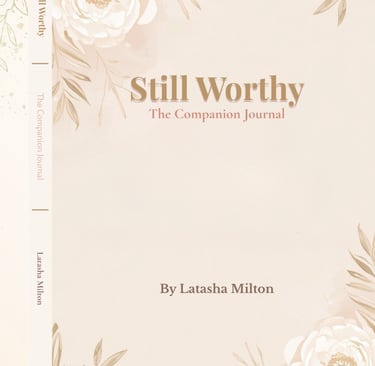
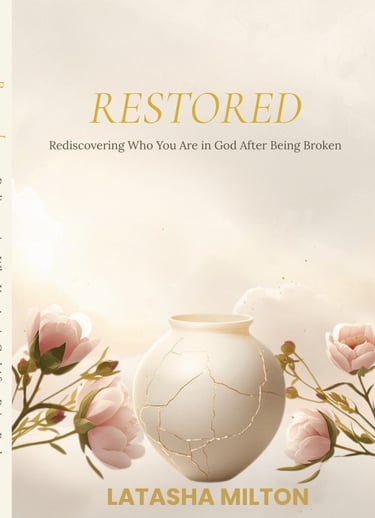
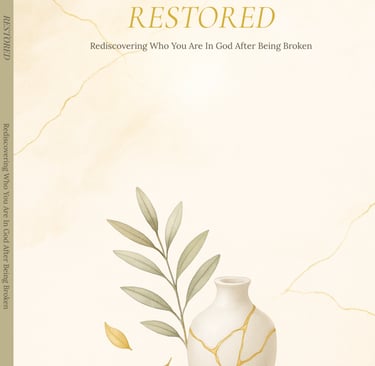
Writing is a spiritual act. It honors the work God is doing in you and if you need a guided place to start, Still Worthy or Restored
5. Let God Heal Parts You Aren’t Talking About
Some of the deepest wounds are the ones you’ve never put into words. The ones you’ve carried quietly.
The ones no one knows about. The ones you’ve learned to function with, even though they still ache underneath the surface. These hidden wounds—old betrayals, unspoken disappointments, childhood hurts, silent heartbreak, moments that stole your confidence, and memories you avoid—are often the places where God wants to bring the most profound healing.
You don’t have to articulate the pain perfectly for God to begin restoring it.
You don’t have to explain it.
You don’t have to relive it.
You don’t even have to fully understand it.
God heals what you show Him, but He also heals what you cannot say out loud. The slow seasons of healing are often the seasons where God begins touching the parts of you that you’ve buried . The parts you keep hidden because:
it hurts too much to talk about
you feel ashamed
you don’t want to look weak
you don’t want to revisit the memory
you don’t know how to express it
you’re afraid of what others will think
you’ve taught yourself to “just move on”
But God sees the wounds you’ve learned to hide and He is gentle enough to heal them. There is nothing too messy, too ugly, too sensitive, or too painful for God. Healing the unspoken parts looks like:
unexpected tears you can’t explain
new clarity about old situations
feeling emotions you’ve ignored for years
realizing something deeply affected you
a sudden desire for boundaries
understanding a pattern that once confused you
seeing your younger self with more compassion
These signs mean God is doing heart surgery on layers you never verbalized. Slow healing allows Him to work quietly in the background—rebuilding your identity, restoring your confidence, and breaking emotional strongholds that have gone unaddressed for too long. You can trust God with the wounds you’ve never told anyone about.
Scripture:
“The Spirit Himself intercedes for us through wordless groans.” — Romans 8:26
Even when you don’t have the words, the Holy Spirit speaks for you. Even when you feel broken, God is working beneath the surface. Even when you can’t articulate your pain, God understands it completely.
Let God into the places you’ve kept locked.
Healing starts where honesty begins — even the honesty you can’t express out loud.
You don’t have to talk about it for God to touch it.
You don’t have to relive it for God to redeem it.
You don’t have to defend it for God to deliver you from it.
Give God access.
Give God room.
Give God permission.
Because the parts you aren’t talking about are the ones God most wants to restore.
6. Surround Yourself With Voices That Uplift You
Healing becomes harder when you’re surrounded by voices that drain you, discourage you, or dismiss what you’re going through. One of the clearest signs that God is restoring you is the growing desire to be around people who speak life, hope, and truth.
You heal faster when you’re supported by:
friends who check on your heart
mentors who speak wisdom
community that encourages your growth
content that strengthens your spirit
spaces where you can be honest
You don’t need a crowd during healing. All you need are the right voices. Voices that remind you of who you are, who God is, and what’s still possible for your life. Be intentional about choosing voices that uplift you, not drain you. Your environment matters as much as your prayers.
Scripture:
“Therefore encourage one another and build each other up.” — 1 Thessalonians 5:11
Healing is easier when you don’t walk through it alone.
7. Pray Honest Prayers, Not Perfect Ones
One of the biggest misunderstandings about healing is the belief that we must pray “strong,” polished, or perfectly worded prayers for God to hear us. But God is not moved by perfection. He is moved by honesty.
Your most powerful prayers in a slow healing season are often your simplest ones:
“God, I’m tired.”
“God, I don’t understand.”
“God, this still hurts.”
“God, please help me.”
“God, stay close.”
Honest prayers open the door to real healing. They give God access to the places you’re actually struggling, instead of the places you pretend are fine.
You don’t have to mask your emotions before God.
You don’t have to hide your doubts.
You don’t have to pretend you’re okay.
God already knows and He welcomes every word you whisper. Raw, unfiltered prayers create spiritual intimacy. They pull you into God’s presence without pressure or performance. They remind your heart that healing happens not in perfection, but in authenticity.
Scripture:
“The Lord is near to all who call on Him, to all who call on Him in truth.” — Psalm 145:18
God draws near when you are real and your honest prayers may be the very thing that helps you keep going when healing feels slow.
How Slow Healing Prepares You for Purpose
Slow seasons of healing are not wasted seasons. They are the very soil where God grows your purpose. When God heals you slowly, He is not delaying your destiny—He is preparing you for it. Pain may have broken you, but slow healing is what shapes you for the calling God is leading you into next.
Here’s what slow healing does:
1. Slow Healing Builds Spiritual Depth
Fast healing may relieve pain, but slow healing develops rooted faith.
You learn how to cling to God in the dark.
You learn how to trust Him when the answers don’t come quickly.
You learn how to rely on His presence instead of your own strength.
Purpose is cultivated in deep places, not shallow ones.
2. Slow Healing Increases Compassion and Empathy
Your healing journey becomes the ministry God uses to help others. You understand suffering in a way you couldn’t before. You carry compassion for women walking through the same pain you survived. You speak with tenderness instead of judgment. Purpose flows from healed empathy, not hardened experiences.
3. Slow Healing Increases Compassion and Empathy
Your healing journey becomes the ministry God uses to help others. You understand suffering in a way you couldn’t before. You carry compassion for women walking through the same pain you survived. You speak with tenderness instead of judgment. Purpose flows from healed empathy, not hardened experiences.
4. Slow Healing Aligns Your Heart With God’s Will
During slow healing, God realigns your desires, values, and priorities so your purpose is not driven by:
insecurity
fear
validation
trauma
pressure
people-pleasing
Instead, you become guided by:
clarity
peace
discernment
confidence
calling
Slow healing positions you exactly where God needs you to be.
Scripture:
“After you have suffered a little while, the God of all grace… will Himself restore you and make you strong, firm and steadfast.” — 1 Peter 5:10
God is not just healing you. He is restoring, strengthening, and establishing you for the purpose He planned before the pain ever entered your life. Slow healing is not holding you back. It is preparing you to rise.
Keep Rising, Keep Healing
If this message spoke to you, you’re not alone. Slow healing is still healing and you deserve support, encouragement, and biblical guidance every step of the way. Here are powerful next steps to help you continue your journey:
1. Download Your Free Devotional
7 Promises of Purpose After Pain
A 7-day guided devotional to help you reconnect with God’s hope, rebuild your identity, and strengthen your heart during healing.
Download your free copy here
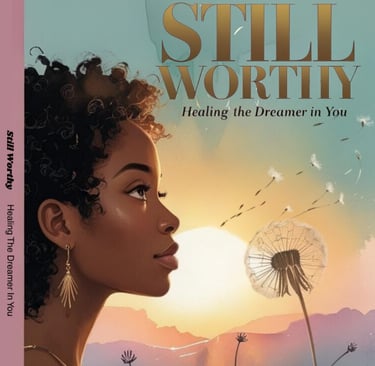
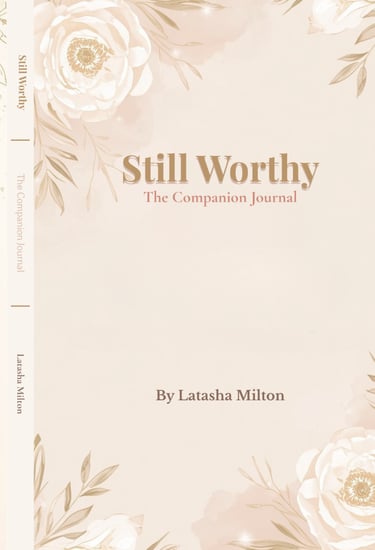
2. Start Your Healing Journey With Still Worthy
A life-changing devotional journal that helps you reclaim your worth, break old patterns, and silence the lies that pain left behind.
➡️ Explore Still Worthy
3. Ready to Heal on a Deeper Level? Try Restored
If you’re ready to break old emotional patterns, this journal is a sacred space to get Breakthrough in areas you’ve struggled silently and be released from shame, guilt, and old wounds
➡️ Get your copy of the Restored 30-Day Devotional Journal

CompanionJournal
Devotional Journal
Devotional Journal
CompanionJournal