"Where Creativity Meets Confidence – For Kids, Adults & Lifelong Learners!"
What Should a 4-Year-Old Know? Preschool Checklist
Wondering what a 4-year-old should know? This simple preschool checklist covers literacy, math, social skills, and emotional development for ages 3–5.
Latasha Milton
2 min read
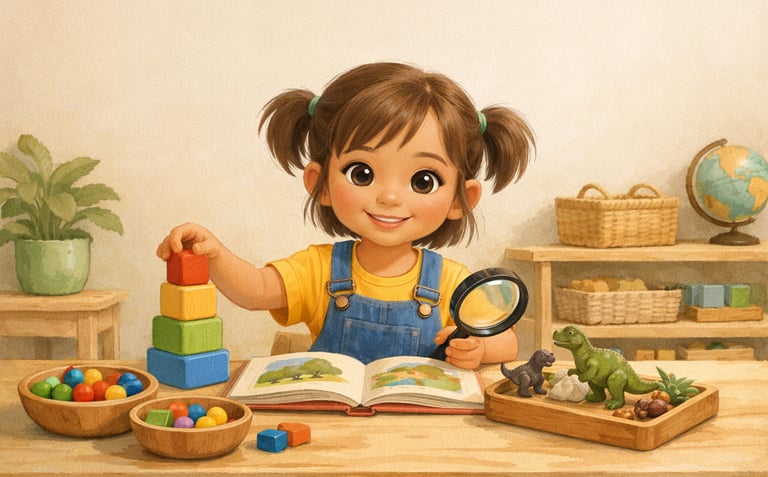
If you’ve ever wondered…
“Is my child behind?”
“Are we doing enough at home?”
“What should a 4-year-old actually know?”
You’re not alone. Many parents feel pressure to turn preschool into a mini classroom, filled with worksheets, flashcards, and rigid routines.
But The truth is:
At four years old, children don’t need perfection. They need practice, play, and patience. This simple preschool checklist will help you understand what truly matters, academically, socially, and emotionally, without overwhelm.
The Big Picture: Preschool Is About Foundations
At age 4, learning should focus on:
Curiosity
Language development
Early math awareness
Problem-solving
Social skills
Emotional growth
Learning at this age should not be totally focus on memorization, busywork or pressure.
Academic Skills (Early Learning Foundations)
Your 4-year-old may begin to:
Language & Literacy
Recognize some letters (especially in their name)
Identify a few letter sounds
Speak in full sentences
Retell a simple story
Ask LOTS of “why” questions
Recognize their name in print
Important: They do not need to read yet.
Early Math Skills
Count to 10 (or higher)
Recognize some numbers
Understand “more” and “less”
Sort objects by color, size, or shape
Identify basic shapes
Begin simple patterns (red, blue, red…)
Math at this age should look like:
Blocks, snacks, nature walks, and counting toys.
Cognitive & Thinking Skills
At four, children typically:
Ask questions constantly
Experiment with cause and effect
Solve simple problems (“How do I build this tower?”)
Engage in imaginative play
Follow 2–3 step directions
Begin understanding time words (yesterday, tomorrow)
This is where STEM naturally begins, through curiosity.
Social Skills
A 4-year-old may:
Play cooperatively with others
Take turns (with reminders)
Express preferences
Follow simple group rules
Show empathy (“She’s sad.”)
Sharing is still developing. Conflict is normal.
Emotional Development
Emotionally, preschoolers are learning to:
Name basic feelings (happy, sad, mad)
Recover from frustration (with support)
Use words instead of physical reactions (sometimes!)
Show affection
Begin calming themselves with help
Big feelings are not a sign of failure. They are a sign of growth.
Fine & Gross Motor Skills
Fine Motor
Hold crayons with improved control
Cut with child-safe scissors
Draw basic shapes
Begin writing some letters (optional)
Gross Motor
Hop on one foot
Climb confidently
Throw and catch a ball
Run and stop with control
Movement matters more than worksheets.
What a 4-Year-Old Does NOT Need
Let’s relieve some pressure:
Your preschooler does not need to:
Read fluently
Complete workbooks daily
Master sight words
Do timed math drills
Sit for long academic blocks
Four-year-olds learn best through: Play, exploration, and conversation.
How to Support Learning at Home (Simple & Effective)
Instead of asking:
“What should they know?”
Try asking:
“How can I create space for curiosity?”
Here are 5 simple daily supports:
Read aloud every day
Count objects in real life (stairs, snacks, toys)
Let them build, stack, and experiment
Talk about feelings openly
Follow their questions
That’s preschool.
Reminder for Parents
Every child develops at a different pace.
If your child:
Loves dinosaurs but not letters
Talks endlessly but avoids counting
Builds constantly but resists writing
That’s normal. Strengths show up before balance does.